
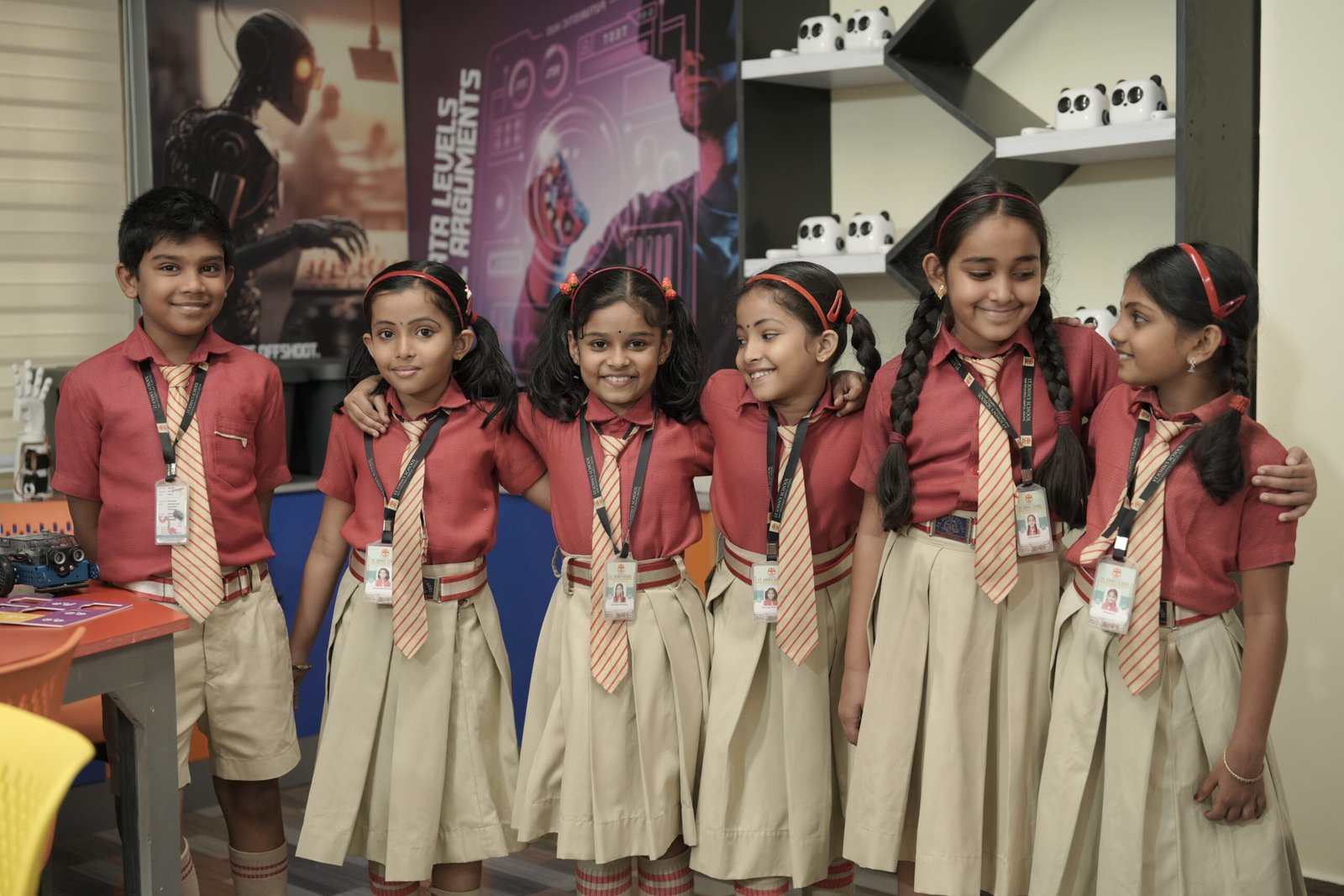
Every year a few students leave school with excellent marks and struggle in the years that follow, while others with ordinary results go on to lead teams and build careers. The difference is rarely intelligence. It is usually the set of capacities we group under emotional intelligence: knowing what you are feeling, managing it, reading other people accurately, and handling relationships well.
What emotional intelligence actually means
The term gets used loosely, so it is worth being precise. It covers four practical abilities. Recognising your own emotion as it happens, rather than after it has caused damage. Regulating it, so that frustration does not become an outburst and anxiety does not become avoidance. Recognising emotion in others, which is the basis of every functioning team. And acting on all three well enough to keep relationships intact under pressure.
None of these are personality traits fixed at birth. They are skills, which means they improve with practice and deteriorate without it.
Why it matters more as students get older
In the early years, a school can manage a child’s environment closely enough that emotional skill is not tested hard. By the middle school years that protection falls away. Friendships become complicated, comparison becomes constant, and academic pressure begins to rise. Students who cannot name what they are feeling tend to express it in ways that get them into difficulty.
By Classes 11 and 12, the stakes are higher again. The ability to sit with a poor test result, work out what went wrong and return to the desk the next morning is, in practical terms, worth more marks than any technique. Students who lack it often work hard but erratically, in bursts driven by panic.
How a school can teach it
Not, in our experience, through lectures about values. Emotional intelligence is learned in situations where emotion is actually present, which means it is taught in the places where things go wrong.
The house system does a great deal of this work. Competition between our four houses produces genuine disappointment, and disappointment handled in a group, with a teacher present, is a controlled way to practise losing. A student who congratulates the winning house while still upset has done something genuinely difficult.
Group activities do the rest. In the literary and debate club a student learns to disagree without hostility. In team sport they learn that their mood affects other people. In the arts and music programme they learn to expose something personal to an audience and survive the response. In chess, a student learns to lose privately, analyse why, and come back. These are emotional lessons wearing co-curricular clothes.
Alongside this, our special educator and wellness support exist so that a child who needs more than the ordinary structure can get it, and so that teachers have somewhere to refer a concern rather than carrying it alone.
What parents can do
Name emotions out loud at home, including your own. A parent who says “I am frustrated, I need ten minutes” teaches more about regulation than any amount of instruction. Resist solving every problem: a child who is always rescued from a difficult friendship never learns to negotiate one. And when your child brings you a failure, respond to the feeling before the fact. The analysis of what went wrong can wait until they are calm enough to hear it.
The leaders we are trying to produce
The students who go on to lead are not usually the loudest or the highest scoring. They are the ones other students trust: the ones who stay steady when something goes wrong, who notice when a classmate is struggling, who can be disagreed with. Those qualities are built slowly, in ordinary school situations, by adults who take them as seriously as the syllabus. That is the work, and it is worth doing well.