There is a tendency to describe school life through its highlights: the annual day, the sports meet, the results announcement. But a school is mostly made of ordinary days, and the ordinary days are where the real work happens. Here is what one looks like at St. John’s School, Anchal, and why the unremarkable parts matter most.
Before the first bell
The day starts on the road. Our buses cover the routes around Anchal and bring in students from villages across the area, which means a good number of children have already had an hour of their day before they reach the gate. That journey is part of school too. It is where friendships across year groups form, where homework gets finished, and where the youngest children learn to look after their own belongings.
On campus, the first movement is towards the grounds. Mornings are when the playgrounds are busiest, and the children who arrive early get the best of them.
The classroom hours
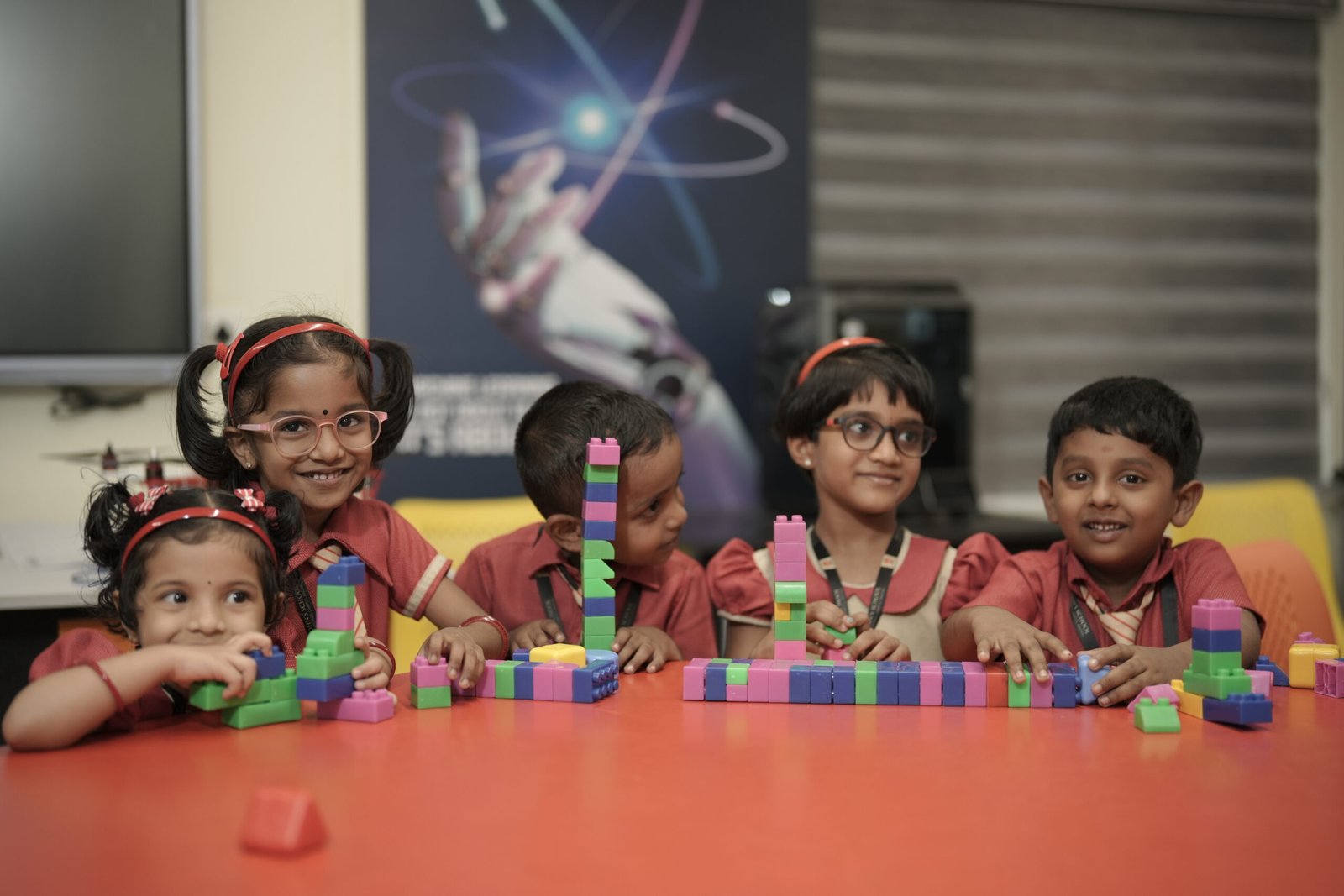
Most of the day is spent in class, and most of that is unspectacular in the best sense: a concept introduced, examples worked, questions asked, a few students asked to explain it back. Our classrooms are equipped for digital teaching, with seventy-four of them set up for it, but the technology is a tool rather than the lesson. A good explanation on a blackboard still beats a poor one on a screen.
The laboratory periods are different in character. In physics, chemistry, biology and the computer labs, students stop receiving and start doing, and the noise level tells you when a practical is going well. Mistakes are cheap in a laboratory, which is precisely why they are valuable there.
The games period
The games period is not a break from education. It is a different subject with a different syllabus. Football and volleyball run on the grounds, karate and skating have their own sessions, and the house competitions give all of it a purpose beyond exercise.
Sport teaches things that are difficult to teach anywhere else. It teaches losing, which most children have very little practice at. It teaches that effort and outcome are related but not identical. It teaches a student who is not the best player that the team still needs them. Our four houses exist partly so that every child, whatever their ability, ends up representing something.
It also teaches recovery. A child who loses a match on Tuesday and turns up for practice on Wednesday has learned something about resilience that no lesson can deliver.
The quieter corners
Not every child finds their place on the field. The library, with its sixteen thousand books, daily newspapers and periodicals, is where a good number of them go instead, and the club sessions cover most of the rest: science, literature and debate, arts and music, ecology, robotics and now chess. Chess in particular is a useful bridge, because it offers competition without physical contest, and children who avoid the field will often play for hours.
Why the ordinary matters
Highlights are what a school photographs. Habits are what a school builds. The child who reads a little every day, practises a little every week and turns up after a defeat is being formed by repetition, not by events.
So when parents ask what their child did at school today and receive the usual shrug and “nothing much”, it is worth remembering that nothing much is where most of the growing happens. The wonders of an education are rarely visible on the day. They accumulate, quietly, across a great many ordinary mornings.