Every school has an official story, told in prospectuses and results tables. It also has a real one, told in the things people remember years later. The real story of St. John’s School, Anchal is not held in any document. It lives in the accumulated memory of the students, teachers and families who have passed through this campus since 1984.
A school built by a community
This school began as a commitment by the Malankara Catholic Educational Society to the families of Anchal and the surrounding villages of Kollam district. That origin still shapes how the school works. Our students come from this region, our buses cover these roads, and a great many of our parents were once students here themselves. When a school and its town grow up together, the relationship is different from one where the school merely occupies the land.
It shows in practical ways. Former students return as parents and, in some cases, as teachers. Families know each other across year groups. A child’s reputation in the school is connected to a life outside it, which cuts both ways, but on balance it keeps everyone honest.
The stories students remember
Ask an alumnus what they recall and you will hear about the teacher who refused to give up on them. You will hear about a house competition decided in the last event. You will hear about the day they were trusted with something, a responsibility, a role, a younger student to look after, and discovered they could carry it.
What you will rarely hear about is a lesson. This is not an argument against lessons. It is a reminder that the curriculum is the frame, not the picture. The picture is made of relationships and responsibilities, and a school that only manages the frame will be forgotten by the people it taught.
Houses, clubs and the habit of belonging
Our four houses are the oldest continuing tradition in the school. Every student belongs to one, and membership does not change. Houses are how a school of this size stays human: within a house, a child is not one of two and a half thousand, but one of a few hundred with a shared name to defend.
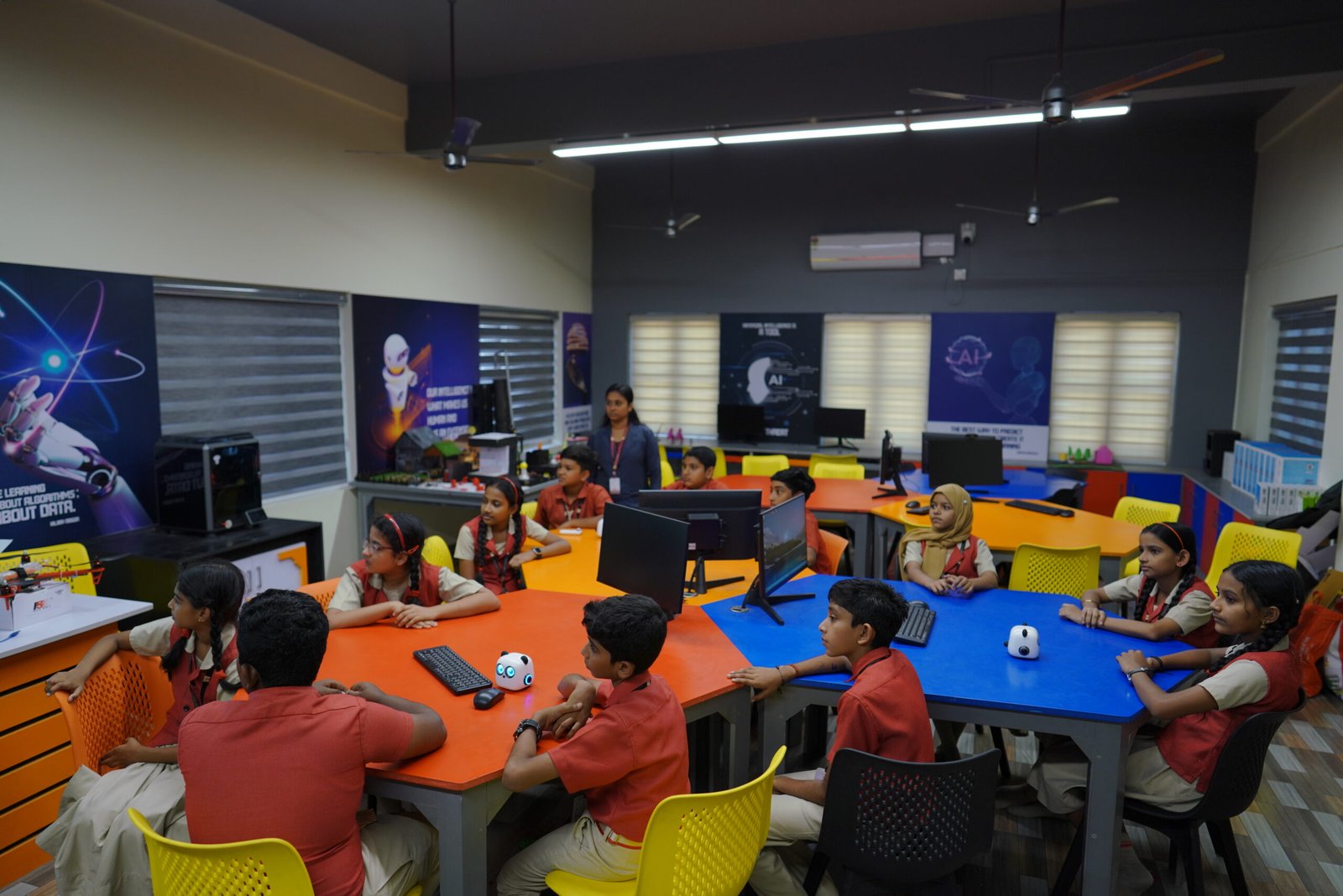
The clubs work differently. Houses give you a group; clubs give you a subject. The science club, the eco club, the literary and debate club, the arts and music club, the artificial intelligence and robotics club, the sports club and our newest addition, the chess club, each meet weekly. Students choose one at the start of the year. The choice is theirs, and that matters. A commitment a child has made for themselves is honoured differently from one that has been arranged for them.
Service, and looking outward
A school community that only looks inward becomes complacent. Our eco club work, the activities of the NCC unit and the service projects our senior students take on exist to turn students’ attention outward, towards the place they live. It is easy to teach children that they are fortunate. It is harder, and more valuable, to give them something concrete to do about it.
Why the stories matter
We collect these stories deliberately, in assemblies, in the school magazine and in conversation, because they are how values actually transmit. A child does not become generous because generosity is on a list of school values. They become generous because they watched a senior student do something generous and noticed that it was admired.
That is the quiet mechanism by which a school shapes young minds: not through instruction, but through what it visibly rewards. Every story we choose to tell is also a choice about the kind of adult we hope is listening.